
Pool Service Tips
The Hidden Costs of DIY Pool Maintenance: Why Hiring a Professional Saves Money
Most DIY pool owners are not bad at it. They are just guessing on a few variables that turn out to be expensive.
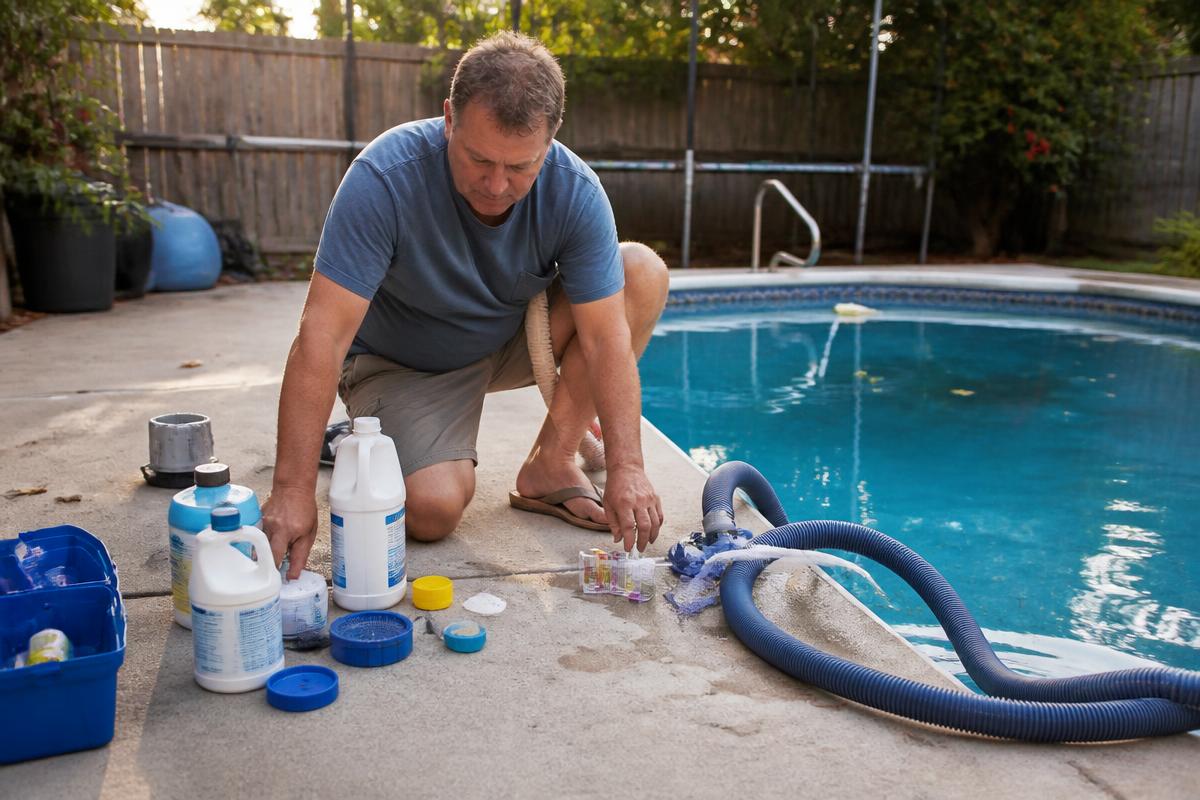
Chemicals cost more when you guess
Test strips give a rough read, and a rough read leads to overcorrection: too much acid, then too much alkalinity increaser, then shock to fix the cloudiness that followed. Each correction consumes product and drifts the water further from balance.
A professional works from a full liquid test — chlorine, pH, alkalinity, calcium hardness, cyanuric acid and salt where relevant — and adds the smallest amount that actually moves the number.
Equipment wear you do not see
A filter that is never deep-cleaned makes the pump work harder every day of its life. Run times set once in spring and left alone either waste electricity or under-filter the water. Low water in the skimmer runs a pump dry and destroys a seal in minutes.
None of these produce an immediate symptom. They produce a shorter equipment lifespan, which is where the real money goes.
Surface and structural damage
Water that sits acidic etches plaster and dissolves grout. Water that sits scaling leaves rough calcium deposits on tile and inside the heater. Both take months to appear and thousands to correct — replastering is one of the most expensive things a pool can ask for.
Metal staining from unbalanced fill water and salt-related corrosion fall into the same category: slow, quiet and costly.
- Etched or rough plaster from sustained low pH
- Calcium scale on tile and inside heater exchangers
- Failed pump seals from running dry
- Shortened salt cell life from unaddressed scaling
- Stains that require draining and acid washing to remove
The cost of your weekends
Between testing, brushing, vacuuming, filter care and trips for chemicals, DIY pool ownership runs a few hours a week through the season — more when something goes wrong, and it goes wrong on holiday weekends.
Put an honest hourly value on that time and the gap between DIY and professional service narrows sharply, before counting a single avoided repair.
A reasonable middle ground
Not everyone needs full service. Some owners handle the weekly routine and bring in a professional for chemistry-only visits, seasonal equipment checks or troubleshooting.
The mistake is not doing it yourself. It is doing it yourself without accurate testing and without a plan for the technical work.
Key takeaways
- Strip-test guessing leads to overcorrection and wasted chemicals.
- Most DIY costs are invisible: shortened equipment life and slow surface damage.
- Chemistry-only or seasonal service is a fair middle ground for hands-on owners.