Pool Service Tips
Salt Water Pools vs. Chlorine Pools
Salt pools are still chlorine pools. The difference is where the chlorine comes from — and what that changes for you.
The common misunderstanding
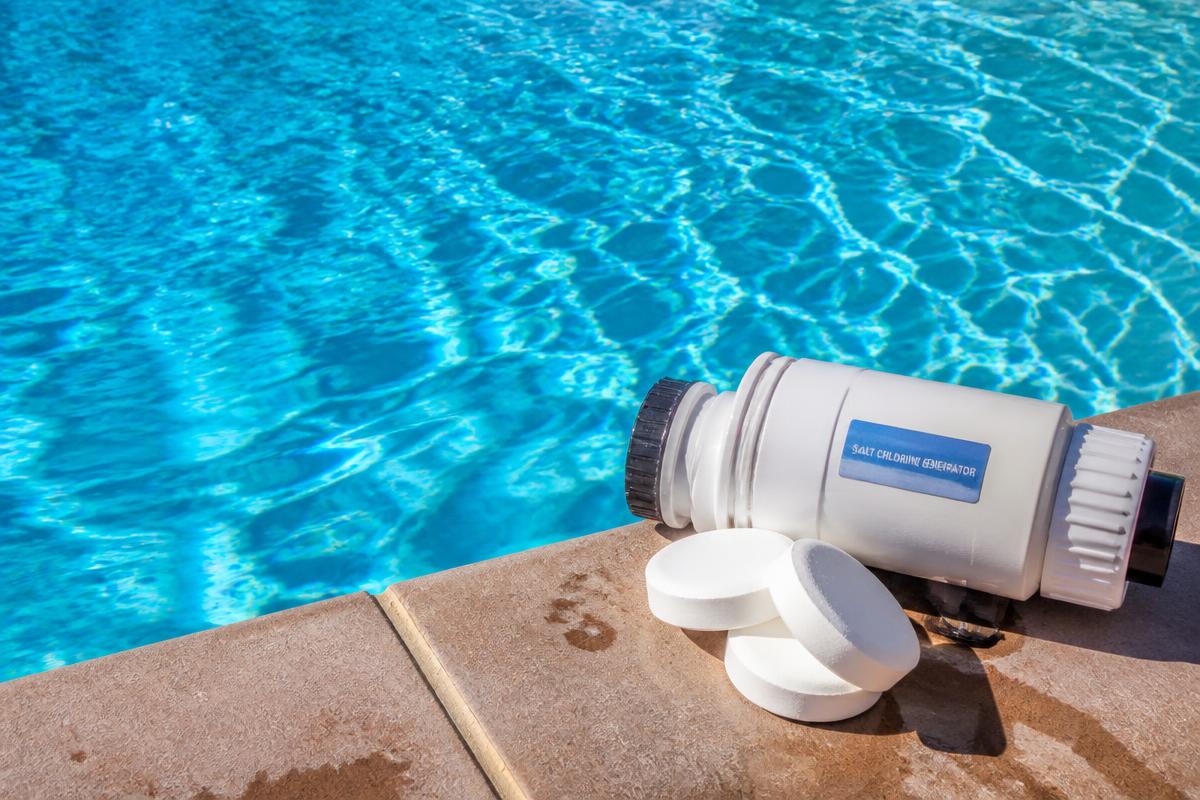
A salt water pool is not chlorine-free. A salt chlorine generator passes low-salinity water over an electrified cell and produces chlorine on site, continuously, from the salt already dissolved in the water.
What changes is the delivery: a steady trickle instead of doses added by hand. That steadiness is why salt pools feel gentler on skin and eyes — it avoids the spikes and dips of manual chlorination.
Cost over time
Salt systems cost more up front — the generator plus installation — and less per month, since you buy salt occasionally instead of chlorine constantly. The offsetting expense is the cell itself, which is a wear item typically replaced every three to seven years.
Traditional chlorine pools cost almost nothing to set up and more to run, with ongoing purchases of tablets or liquid and the storage and handling that come with them.
- Salt: higher install, lower monthly, periodic cell replacement
- Chlorine: minimal install, steady ongoing chemical cost
- Both require the same balance testing — pH, alkalinity, hardness, stabilizer
Maintenance differences that matter here
Salt pools still need weekly testing. Salinity has to stay in range, and pH tends to drift upward with a generator running, so acid demand is typically higher.
In hard North Bay water, cells scale. Periodic inspection and cleaning of the cell is the maintenance item salt-pool owners most often overlook, and neglecting it shortens cell life considerably.
Salt is also mildly corrosive over time to some metal fittings, natural stone coping and certain heater components — worth planning for in material selection.
Which one to choose
Choose salt if you swim often, value soft-feeling water and steady sanitizer, and would rather handle fewer chemicals. Choose traditional chlorine if you want the lowest possible entry cost, simple equipment, or you use the pool seasonally.
Either way the outcome depends on the same thing: consistent testing and balance. A neglected salt pool turns green exactly as fast as a neglected chlorine pool.
Key takeaways
- Salt pools generate their own chlorine — they are not chlorine-free.
- Salt costs more up front and less monthly, with a cell to replace every few years.
- Hard local water scales salt cells, so cell inspection is a real maintenance item.