Pool Service Tips
What a Discolored Pool Can Mean
Discoloration is a symptom, not a disease. Matching the color to the cause saves chemicals, money and a weekend.
Green: algae, almost always
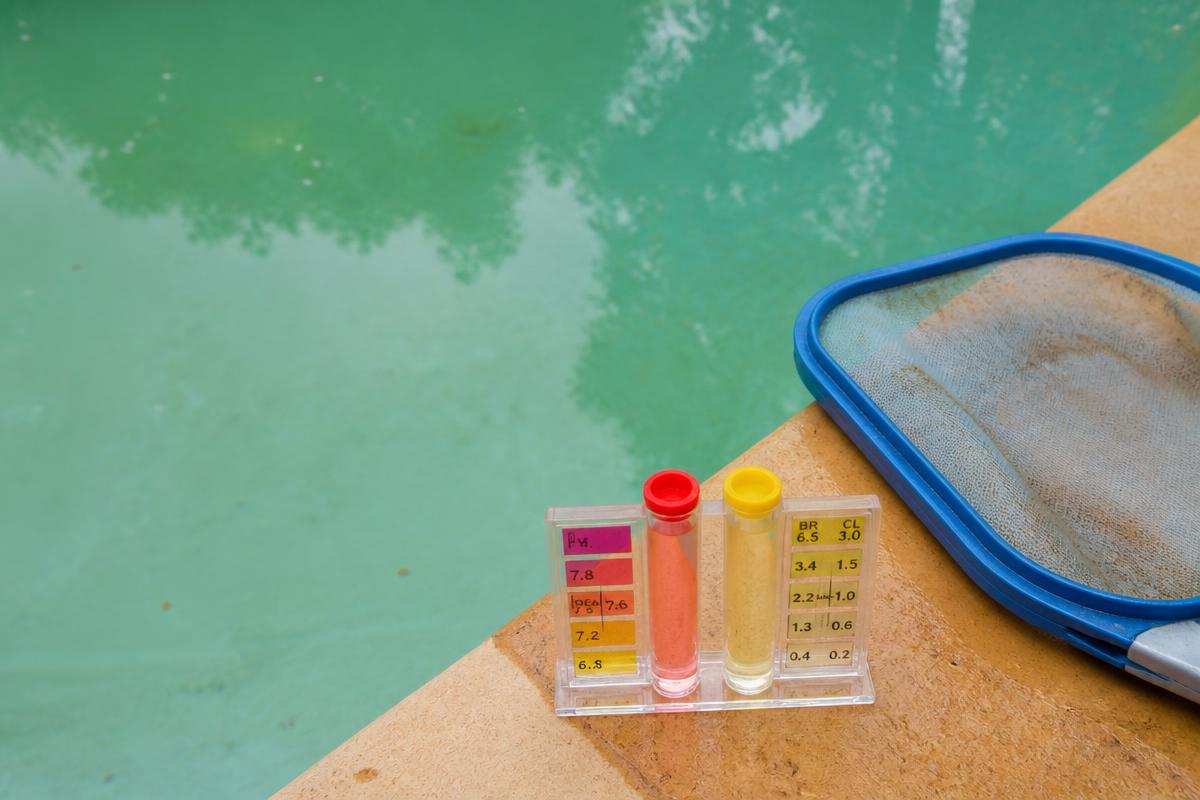
A green tint means free chlorine has fallen behind algae growth — often after a hot week, a party, or a pump that quietly stopped running on schedule. Faint green is early bloom; deep green with slick walls is established.
The fix is not one bottle. It is testing, correcting pH so chlorine can work, shocking to the level the bloom actually requires, brushing every surface, and filtering continuously until the water clears. Skip the brushing and it returns within days.
Cloudy: chemistry or filtration
Milky or hazy water with no color usually points to high pH or calcium, a filter that needs cleaning, or run times that are too short for the season. Fine particles stay suspended because nothing is removing them.
Work in order: test and balance, clean or backwash the filter, then extend run time. Clarifiers treat the symptom and are a last step, not a first one.
Brown, yellow or rust-colored
Brown tea-colored water in North Bay yards often comes from tannins after oak leaves sit in the pool. Rust or yellow-brown staining more often means iron or manganese in fill water, or a corroding metal component.
Mustard algae is the other suspect for yellow patches on shaded walls — it resists normal chlorine levels and needs a targeted treatment plus thorough brushing.
- Tea brown after leaf debris: tannins — shock, filter and clear the debris source
- Rust streaks near fittings: metal corrosion — inspect the equipment
- Yellow dust on shaded walls that returns: mustard algae — targeted treatment
- Gray-white cloudiness with rough tile: calcium scale — check hardness
When to call for help
If the color returns within a week of treatment, the underlying cause has not been addressed — circulation, filtration, or water that is chemically out of balance in a way strip tests do not reveal.
A professional test of the full panel, including cyanuric acid, calcium hardness and total alkalinity, usually explains a stubborn pool in one visit.
Key takeaways
- Color points to the cause: green is algae, hazy is chemistry or filtration, brown is debris or metals.
- Correct pH before shocking, and always brush — untreated surfaces re-seed the bloom.
- Discoloration that returns within a week means the real cause is circulation or balance.