
Pool Service Tips
Proper Pool and Spa Maintenance: A Year-Round Commitment
Pools do not take the winter off in Northern California. Neither should the routine — it just changes shape.
The weekly baseline
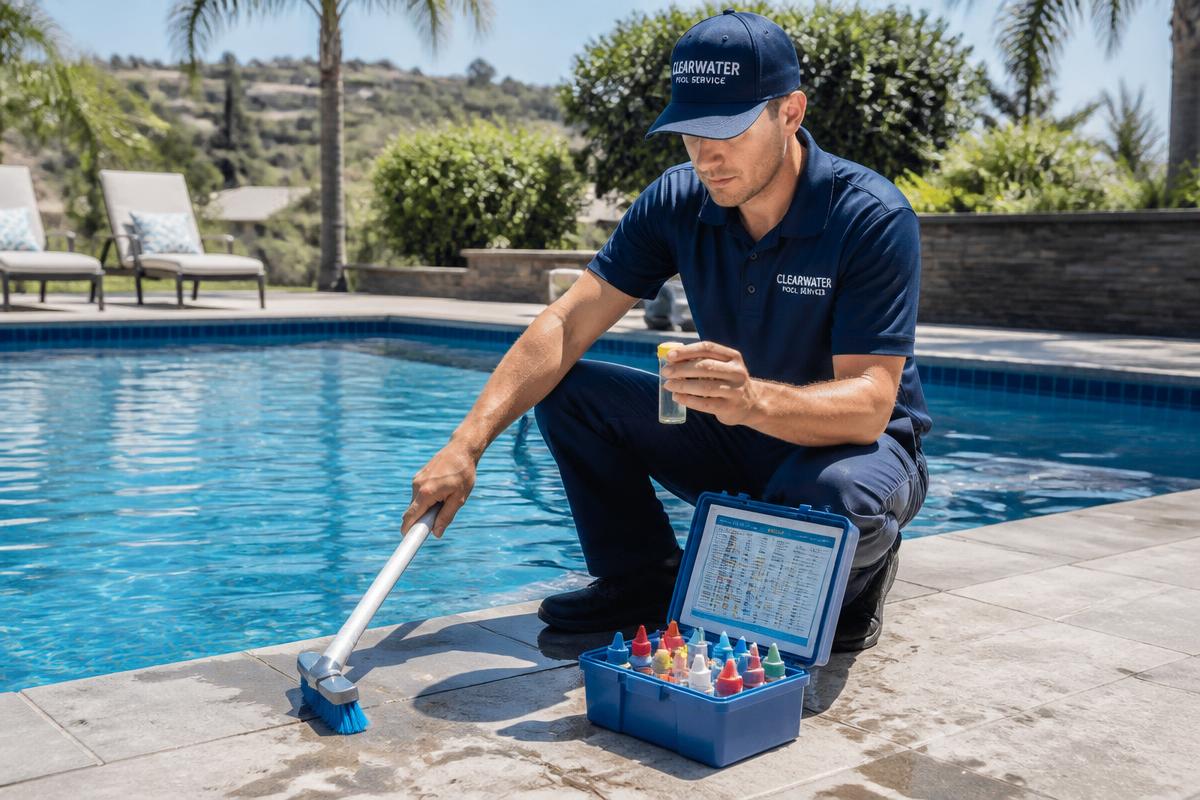
Every week, in every season: test and balance the water, empty skimmer and pump baskets, brush walls and steps, skim the surface, and check that the equipment is running the way it should.
Consistency is what makes this work. A pool that gets attention every week stays easy; a pool that gets attention when it looks bad is always being rescued.
- Free chlorine 1–3 ppm (higher briefly after heavy use)
- pH 7.4–7.6
- Total alkalinity 80–120 ppm
- Calcium hardness 200–400 ppm on plaster
- Cyanuric acid 30–50 ppm in outdoor pools
Spring: the hardest month is the first one
As the water warms past the mid-60s, algae wakes up and chlorine demand climbs. Pollen loads filters quickly, and run times set for winter are suddenly too short.
Spring is also the right moment for a full equipment check — pump, filter, heater, automation and the salt cell if you have one — before the season depends on all of it.
Summer: heat, use and evaporation
Long dry Napa and American Canyon summers evaporate water fast, concentrating calcium and salt. Heavy swimmer load burns sanitizer. Sun degrades chlorine daily, which is what cyanuric acid is there to slow.
Expect longer run times, more frequent testing and regular top-offs. Watch the filter pressure gauge — summer is when it climbs fastest.
Fall and winter: the season people skip
Fall means leaves, and leaves mean stains and clogged baskets. This is the season for frequent skimming and, on oak-heavy Green Valley and Coombsville lots, a cover worth using.
Winter pools in the North Bay still need circulation and sanitizer — just less of both. Shortening run times too aggressively is the single most common cause of the green pool people find in February.
What belongs to a professional
Filter teardowns and deep cleans, heater diagnostics, pump seal and motor work, salt cell inspection, automation programming and stain diagnosis all call for equipment and experience most owners do not have.
The practical split: handle the weekly rhythm yourself if you enjoy it, and bring in a service for the technical work and the seasonal transitions — or hand over the whole routine and get your weekends back.
Key takeaways
- Weekly testing, brushing and basket cleaning is the foundation in every season.
- Spring equipment checks and correct winter run times prevent most seasonal disasters.
- Filter teardowns, heater work and stain diagnosis are professional jobs.